
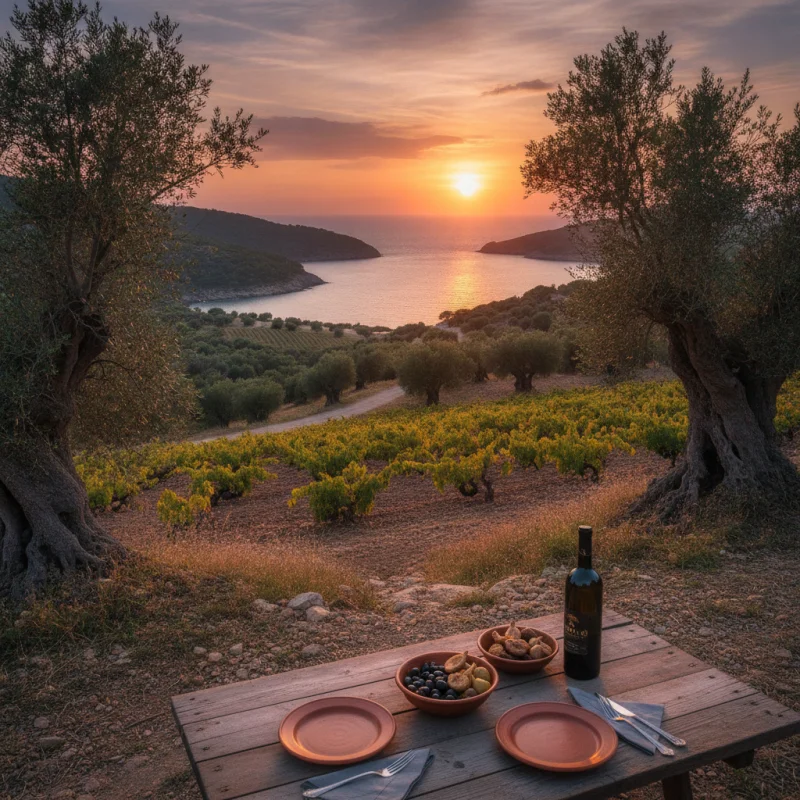
Traditional Ibizan food is one of the great unknowns of the Mediterranean. Ibizan cuisine barely features in international travel guides, despite written references going back to the 14th century. In our experience with guests staying at rural villas on the island, it is the thing that surprises them most and the one they most often repeat on their next visit. If you want to discover the most authentic Ibiza, our guide to local experiences will help you plan every detail.
The traditional Ibizan dishes you should not miss
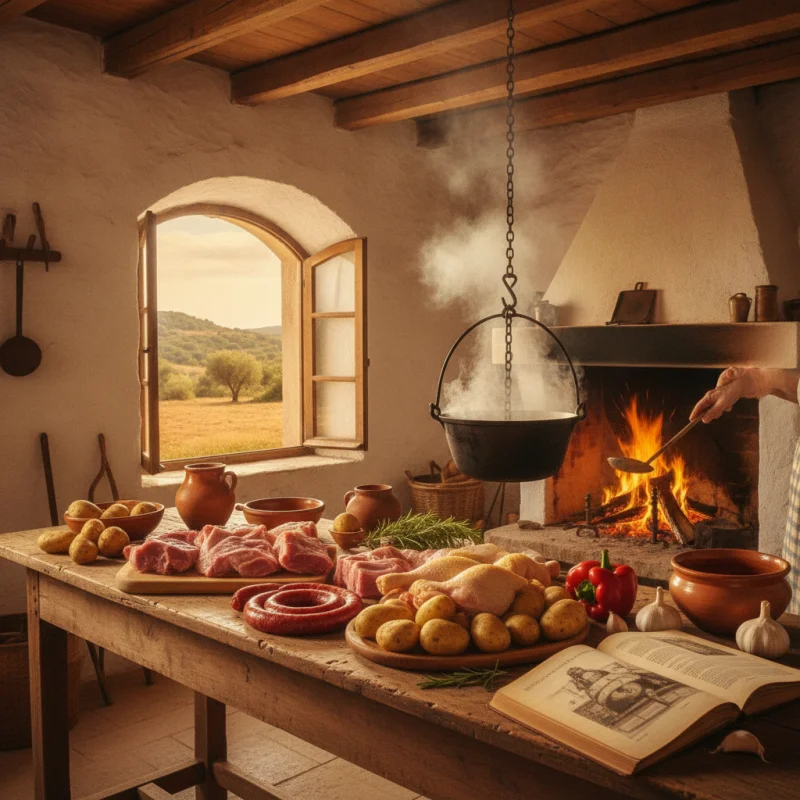
Sofrit pagès is the dish that best represents Ibizan cooking. It is made with lamb, chicken, sobrasada and island potatoes, cooked slowly in an iron pan for at least 2 hours. Historically it was the dish of the great celebrations: weddings, pig slaughters and the patron-saint festivals of the inland villages.
Bullit de peix is the island’s great fish dish. It is served in two courses: first the broth with white rice, then the rock fish — grouper, bluemouth, scorpionfish — with homemade allioli. The fish comes from the Sant Antoni or Ibiza fish markets, caught the same day.
Flaó is the oldest dessert in Ibizan cooking. The first written references to this fresh-cheese tart with mint and aniseed date from the 14th century. It is made above all at Easter and during the Sant Joan festivities (24 June), although local bakeries now offer it all year round.
- Greixonera: a pudding of pa pagès bread, eggs and cinnamon. Made with the bread left over from the day before.
- Arròs de matances: rice with Ibizan pork offal and blood. A winter dish tied to the traditional slaughter from November to January.
- Ibizan longaniza: cured pork sausage with local spices, sweeter in profile than mainland versions.
- Hierbas ibicencas: an artisan liqueur made with between 20 and 30 aromatic plants native to the island, at 24° to 30° proof.
Where to try traditional Ibizan cooking
Find your perfect villa in Ibiza



The restaurants serving authentic Ibizan cooking are concentrated in the inland villages, not along the coast. Santa Gertrudis de Fruitera, 11 km from Ibiza Town, brings together several establishments specialising in local dishes. Sant Joan de Labritja, in the north, holds a producers’ market every Sunday in season with artisan cheeses, Ibizan cured meats and local olive oil.
Can Pilot (Sant Rafel de Sa Creu) has been open since 1977 and is the reference for sofrit pagès. Es Torrent, in the cove of the same name, is the best-known restaurant for bullit de peix done the traditional way. Both recommend booking at least 48 hours ahead from June to September.
Restaurants specialising in traditional Ibizan cooking run a full menu mainly from October to May. In high season the inland villages keep their offer going, but the coastal areas turn theirs towards international cooking.
Ibizan food during your stay at a rural villa
Staying at a rural villa in Ibiza puts the inland villages within less than 20 minutes by car. Municipalities such as Sant Joan de Labritja, Santa Eulària des Riu and Sant Miquel de Balansat are less than 15 km from the island’s main rural estates.
Our concierge service includes restaurant recommendations with the booking handled for you, plus access to local producers of Ibizan cured meats and extra virgin olive oil from varieties native to the Pitiusas. Part of the villa portfolio has a fully equipped kitchen for those who prefer to cook traditional dishes with ingredients from the local market at Sant Jordi or Santa Gertrudis.
Frequently asked questions about traditional Ibizan food
What is the most typical dish in Ibiza?
Sofrit pagès is the dish that best represents Ibizan cooking. It is made with lamb, chicken, sobrasada and potatoes, cooked slowly for at least 2 hours. Its origin is documented in the island’s records from the 17th century and it is still the obligatory dish at inland weddings and patron-saint festivals.
What is Ibizan flaó?
Flaó is a tart of fresh cheese with fresh mint and aniseed. The first written references in Ibiza date from the 14th century, making it one of the desserts with the oldest documented history in the Balearic archipelago. It is eaten above all at Easter and on 24 June, the feast of Sant Joan.
Where can you eat traditional Ibizan cooking away from the tourist areas?
Santa Gertrudis de Fruitera (11 km from Ibiza Town), Sant Joan de Labritja (north of the island) and Sant Rafel de Sa Creu hold the best traditional restaurants. In high season, avoid the beach areas: the offer there is mostly international and prices are 25 % to 35 % higher than inland.
What do you drink with traditional Ibizan food?
Hierbas ibicencas are the island’s traditional digestif: between 20 and 30 native aromatic plants, at 24° to 30° proof. With the meal, wine from Can Rich — the only winery with the Ibiza Denomination of Origin, in Sant Antoni de Portmany — pairs particularly well with sofrit pagès and bullit de peix.
What time of year is best for trying local Ibizan food?
From October to May, outside the high season. In those months the inland restaurants keep their full traditional menu and the local raw ingredients — lamb, rock fish, artisan cheese — are at their best. Low-season prices are 20 % to 30 % lower than in July and August.
 Guías de Alojamiento
What to pack for your Ibiza holiday
Packing for Ibiza might seem straightforward — sun, beach, light clothing — but there are details that make the difference...
16 Mar 2026 Guías de Alojamiento
How to get to Ibiza from mainland Spain and Europe
16 Mar 2026 Guías de Alojamiento